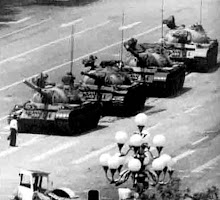
"Nonstop imagery is our surround, but when it comes to remembering, the photograph has the deeper bite....
In an era of information overload, the photograph..is like a quotation, or a maxim or proverb."
(Susan Sontag: Regarding the Pain of Others 2003)

28 September, 2009

Cowgirls in Corsets: Why the Picture Desk loves the Catwalk Shows:


So farewell then, London Fashion Week. The weekend papers made the very most of the last few gobbets of gossip –
i.a: "Doyenne Anna Wintour ignores wannabe Alexa Chung horror";
"Spell-binding Emma “Hermione” Watson all grown up now”

Meanwhile, the front pages featured the last set of opportunistic images before the entire circus packed its natty bondage ankle boots into their custom-made Louis Vuitton trunks and hot-footed it (Business Class, natch) to Milan.

Breaking news so far from the Italian shows?
“Armani explores the future with a “plastic fantastic” theme”
“Raunchy cowgirls in denim corsets at Dolce & Gabbana”
Sex sells at Emilio Pucci

Sex sells? Well, hold the front page. No doubt about it: fashion certainly sells. Picture editors have long been grateful for the bi-annual race around the globe, covering the collections. Unsurprisingly, heel heights, hem lines and super models make for a more appealing front page than the usual parade of grumpy, grubby suited politicos, sombre flag-draped coffins or sundry other sobering trappings of the War on Terror or the global economic crisis.

Much as the advent of colour television transformed the sport of snooker, fashion coverage in so-called serious newspapers started in earnest in the early 1990s, when the first full colour imaging technology began to transform the Front Page. We bid a thankful farewell to tiresome inky fingers but (imho) we also (pace The Independent) lost the bold statement of the impossibly eloquent monochrome news photograph.

Now fashion coverage is considered de rigueur for the most earnest of organs. During my years at the Guardian, the Women’s Page stalwarts would not have considered the catwalks a subject worthy of serious coverage. I do remember one brave Features Desk intern suggesting a fashion-related feature in conference one morning - to audible sniggers. To her credit, she stuck to her guns and, unlike fashion-phobics such as myself, is now still fully and lucratively employed. Only last week, I noted her byline above a piece explaining how to wear the Breton trends, elbow cages, sequins and snakeskin details which apparently “emerged” in London last week.

Now, fashion coverage appears to be a Guardian staple with this breathless round-up pretty much par for the course. If you can’t get enough from the paper or website, you can even follow Milan Fashion Week live as Observer fashionista Helen Seamons tweets live from the Front Row (hashtag #MFW)


Alongside such London Fashion Week scoops as the surprise arrival of Victoria Beckham, I was heartened to see some serious debate triggered by the audacious decision of Canadian designer Mark Fast to use size 12 and size 14 catwalk models. The heart, however, did sink to read that this brave move had prompted Fast’s stylist to resign.

I did find myself last week - albeit briefly - finding rather more respect than I have had to date for Kate Moss, Claudia Schiffer, Linda ($10,000 a day) Evangelista et al. I spent an excruciating two hours having my own photograph taken for a rare appearance as the subject and not the writer of a newspaper article. The photographer John Lawrence was charming, professional and exceptionally patient - as I gurned and grimaced in a bid to convince him that the dogs were far more photogenic than their reluctant owner. Everyone who has seen the piece seems to agree..

Before I sign off, I wanted to thank all this blog's readers - you know who you are! - for their extraordinary patience while this forum became precariously over-weighted with posts about social media and the real time web. I have now transferred these to the new Media140 team blog here. This forum will now return to its main, niche but nice, photo-journalism and fine art theme. To that end, I will also be confining my more personal postings - those cheery themes of elder abuse, assisted suicide, musings on mourning et al to a new forum at: ahappierending.blogspot.com. I do hope you will check it out some time.

04 August, 2009

Killer Robots and Archbishops against the Internet: welcome to the Silly Season


Many countries have a corresponding term for “silly season” & several reference cucumbers or gherkins: Komkommertijd in Dutch, Norwegian Agurktid, Polish Sezon ogórkowy, Hungarian Uborkaszezon and German Sauregurkenzeit.

Welcome to the Silly Season which started, by my own, highly unscientific, reckoning on Sunday, when the Times ran a huge, and apparently serious, piece about scientists fearing the rise of killer robots. Too much time is apparently being spent developing artificial intelligence without enough thought to the concomitant implications of robot – and by inference, human – safety.

Not to be outdone by the bovver boys of Wapping, the Sunday Telegraph came up with its own shock horror scoop: “Catholic Archbishop slams assisted suicide, decries divorce and says Social Networks are shallow”.

Unsurprisingly, the blogosphere, (which, as we all know, never eats, sleeps or takes a holiday – even in August -) was quick to respond to the relevant sections of what was a fairly wide-ranging interview with the Archbishop of Westminster, Vincent Nichols. It is not the first time the Liverpudlian primate’s pronouncements have made the news. He raised several eyebrows at the time of his ordination in May by praising the “courage” of the Irish clergy and religious who had confessed to child abuse. But, as he told the Telegraph’s Jonathan Wynne-Jones somewhat ruefully, he has now come to expect that his every word will be relentlessly examined.

As a cradle Catholic, but one long since formally accepted into the rather less rigid Church of England (far superior architecture and music, rather more practical pointers on the niceties of Christian behaviour) I have to confess that I have long standing reservations about any edicts emanating from Rome or, indeed sweeping statements on almost any subject from clergy, religious or laity of a Papist persuasion.


I can date this aversion fairly precisely, to one morning in the bees-waxed parlour of my convent boarding school, where I sat, waiting to return home for my mother’s funeral. The youngish nun, appointed to sit with me until my aunt arrived, attempted to engage my taciturn 12-year old, just bereaved self, in a philosophical discussion about the reasons for my mother’s premature death, after a long struggle with breast cancer. Her conclusion? “Indeed, myself, or my brother, or more than likely, both of us, must have done something unspeakably wicked for God to take our Mummy away…”

I was not the only reader gobsmacked by the archbishop’s interview. Simon Jenkins, respected editor of successful Christian online community Ship of Fools, said: “I found his comments were disappointing – not based on research, but were his own thoughts on something that seems to me as if he is not involved in, and is speaking from a position of relative ignorance….It is all quite predictable what was said – the Catholic church probably protested when the telephone was invented and the telescope...”

Across the Atlantic, Jere Hester, the cerebral founder of the City University of New York’s NYCity News Service, suggested that the power of social networking to bring people together over common interests, nurture personal relationships and renew old friendships is still being weighed against its potential to isolate those who live online or its use as an instrument of harassment.

Closer to home, on the award-winning Telegraph.co.uk, the paper’s Communities Editor Shane Richmond posited convincingly, in a characteristically candid post, that Nichols was mistaking social problems for technological ones.

My own thoughts on the pros – and cons – of online communities can be found in this post from earlier this year, in which I argue that the former far outweigh the latter.

Finally, I note that Archbishop Nichols spoke to the Telegraph from the southern French Marian shrine of Lourdes, visited by more than six million invalids and their carers every year and by me, on a school trip in the early 1970s, in the hope of a cancer-curing miracle, to be wrought by prayer and ritual immersion in the ice-cold spring where, in 1858, Our Lady appeared to Saint Bernadette. Sadly neither the prayers, nor the humiliating, semi-naked dunking were of any use to my Mother, who died nonetheless, within the year. But then again, Our Lady did heed my selfish post script and within days of my youthful pilgrimage, she cured that pesky veruca.

10 July, 2009

Can Spam ever be amusing? A few thoughts on the Habitat Twitter fall-out


The one and only time I ever found Spam even mildly amusing was a few years ago when I watched a gaggle of American teens queuing up in a Broadway theatre foyer to hand over $15 for a “Spamalot commemorative” tin of the processed pink stuff. It was never ever funny, encased in palid batter fritters served up every Thursday night at boarding school while 21st century non-edible spam is now a non-hilarious, utter menace for anyone with a broadband connection.

Spam – of the cyber variety – increasingly permeates our lives – either directly, into our own in-boxes or sneakily, weaving itself through all our favourite websites or social media networks - as the cheap Viagra peddlers and increasingly, brands big enough to know better, try and jump onto what they see as the free marketing band wagon.

I wasn’t surprised when a “Las Vegas Poker” scam started to spam the Twitter stream from the May 20th #Media140 event in London I helped out with. The sheer volume of live bloggers and tweeters took the hashtag straight to the top of the trends. However, I was not the only one shocked to see UK furniture chain Habitat using top hashtags, including #iPhone & #Mousavi - at a time when protestors were using Twitter to get real time, uncensored news out of Tehran.

In what has now become a text book example of how brands should not use Twitter, the store eventually apologised, initially blaming “an intern” and deleted the offensive tweets – and yet, the fall out continues.

Two weeks ago, the arrival of a flyer about the upcoming Habitat sale prompted me to get myself taken off their database. Sentimental as it sounds, it was a sad decision – I once had a huge, if nostalgic, affection for the brand. My late husband, Peter Griffin, was a key player in the grooviest early days of Habitat in the 1970s, working alongside Terence Conran and eventually taking the brand across the Channel to Holland, where he was working when he and I first met.

Several phone calls later, I found myself connected to the press office line, assured by more than one human voice that this was the correct channel for database queries. Several days later, I still had not managed to speak to a human in the press office. A series of messages left on the voice mail were still unanswered and I resorted, as exhorted by the voice mail message, to e-mail.

Almost by return, I received a response for which the adjective “intemperate” would be mild. It also contained the following “apology” which offers no concrete explanation as to how the spam fiasco happened in the first place.

"The top ten trending topics were pasted into hashtags without checking with us and apparently without verifying what all of the tags referred to. This was not authorised by Habitat. We were shocked when we discovered what happened and are sorry for the offence that was caused. We never sought to abuse Twitter, have removed the content and will ensure this does not happen again...".

On Twitter itself, the @HabitatUK feed has not been updated since June 24th, when the final tweet contained the link to this expiatory post on SocialMediaToday. Meanwhile the ever enterprising Daren Forsyth has launched a Twitter campaign to locate, and then forgive, the putative #Habitatintern. Good luck with that one Daren! Please keep us posted on how Habitat are now “determined to do better for the Twitter community.”

02 July, 2009

Behemoths of Media Buying set to bestride the New Media Landscape (but there is good News for Geeks..)


(If you need a caption for this image, you probably shouldn't be reading this blog)

Hands up if you remember the 1980s? You know, when eyeliner was everywhere, greed was good and mobile phones bigger than bricks were the de rigeur symbols of status.

Back then, I was still a starry eyed young journalist, on my first foreign postings, trying valiantly to shine a little light onto some of the world’s worthier stories. Unsurprisingly, I was utterly unmoved by the entreaties of one particular suitor, who thought the way to my heart would be to whisk me off to lunch at the Ivy – in his Porsche natch - where his lavish corporate expense account allowed him to entertain clients and contacts several times a week.

Actually, it wasn’t the Porsche, the brick-sized mobile or even the bow tie that put me off. Reader: he was a media buyer – the very thought of consorting with a non-creative ad exec sent shivers down my spine. Back then, media buying was not considered an entirely respectable occupation for a gentleman.

But that was then and things have certainly changed in our brave new media world. Humble journalists are obliged to twist their copy to suit complex new click metrics while the media buying behemoths continue to consolidate the power now afforded them by the transparency and accountability of the world wide intraweb.

You may have heard, if only vaguely, of companies called Aegis, Omnicom, Havas, Zenith and WPP, but you probably have little idea of how powerful they have become, given that jointly they control more than 50 per cent of the global advertising market.

This was the frankly chilling scenario eloquently explained by Professor Joseph Turow this week at the Oxford Internet Institute at an event jointly organised by the inestimable Reuters Institute for the Study of Journalism. Professor Turow suggested that the rise of the buyers, leaving the usually lauded creative element of the advertising industry behind, has been under-reported and is – as a consequence – misunderstood.

That newspapers, news journalism and news values per se are undergoing a fundamental change is not news but Turow painted a vivid picture of a media future in which the key players were no longer the once mighty publishing platforms. Those (to some extent, already) in charge will be the media buying agencies, the advertisers, the media rating companies, some third party ad networks and of course, the technology developers.

But what about the journalists, you ask? Well, those who haven’t already crossed the PR Rubicon or been replaced by a far, far cheaper, Anglophone typist on the ground in Bangalore, may be lucky enough to find work with an altruistic foundation, generously funding issue-based journalism along the lines of ProPublica.

There may also still be some work available for hacks prepared to specialise – as advertisers will continue to be willing to fund niche supplements serving distinct interests. Oh and guess what? There is also going to be an awful lot more “refining” of what purports to be straight news to allow for (yet more) product placement.

Prof. Turow, a genial (coincidentally, also bow-tied) Brooklynite, is the author of the cerebral but highly accessible "Niche Envy" and is considered to be the expert on media fragmentation. He also foresaw a future of merged regional news cooperatives and a diverse raft of new organisational forms and alliances between traditional prestige content providers. In principle, this sounds like a reasonable solution, although I have had personal experience of dozens of newspapers attempting to work “together” from my stint as editor of Guardian Europe in the early 1990s and at times, I have to admit, it was not a particularly pretty sight.

So far then, so bleak for all my keen journalism students. I keep telling them to go into something rather less precarious, like investment banking perhaps? No, better still, make that financial PR. And what of the smooth Porsche-driving, bow tied beau, I hear you ask? Reader, I married him.

24 June, 2009

What Flavour is your Muffin? A few thoughts on Harnessing the Power of Twitter

Twitter is a narcotic. Not life-threatening perhaps, but as addictive and as potentially potent as any other class-A habit. I had my first suspicions when I started – relatively recently – to prefer following the tweet stream to actually watching sports events, from the rugby to Formula One. These were confirmed yesterday when I was one of a dozen or two delegates at a London conference on Twitter raising their hands to confess that they were unabashed and enthusiastic Twitter aficionados.


Harnessing the Power of Twitter – organised by Internet World – was clearly aimed at newbies; by far the largest group of elevated hands were from the “using Twitter but don’t get it or need convincing” subset. It’s no secret that I am far from being a Twitter virgin but if I had been one, I’m confident that I would have come away from the sunny Albert Embankment educated, edified and enthused.

The fragrant Vikki Chowney of Six Degrees kicked off with a lucid explanation of micro-blogging as tweets wishing her a very happy birthday popped up on the huge screen adjacent, carrying the live feed of the #hpt09 twitter stream. I particularly liked her identification of Twitter users as narcissists, inactives, marketers, SEO obsessives and Facebook converts. Vikki illuminated Twitter’s efficacy in humanising corporations and gave a great exposition of how NOT to use Twitter highlighting the recent, and IMHO utterly contemptible, spamming of key trending topics by @HabitatUK. The retailer compounded this huge fail by deleting many of the offending tweets but some can still be seen in this piece from BrandRepublic reporting the belated apology. (Congrats Vikki - power of twitter!)

Then Vicky “Good Morning Twitterville” Harres Akers - the human voice of @PRNewswire - gave us a trans-Atlantic perspective of how Twitter enables apparently monolithic conglomerates to give humble consumers a peek behind the curtains. She also stressed the importance of converting all these virtual relationships into real life ones whenever possible.

Glue London’s Jonny Spindler gave an intriguing presentation into the thinking behind the very clever Social Media campaign to transform good old Woolworths from just another High Street casualty into a hip and happening digital brand. I spotted their virtual Easter egg thread but I hadn’t twigged that @team_woolies was behind the irresistible #myfirstsingle meme.

Personally, I was relieved to hear the key themes of “transparency”, “authenticity” and “value” reiterated. The power of the personal also resonated through the next presentation from Future Media veteran and Twitter evangelist Daren Forsyth.

If I had been a newbie, I would have found Tweetmeme founder Nick Halstead’s guide to jargon invaluable. As it was, I discovered some handy Twitter tools of which I was unaware. Nick’s insight into the growing real i.e. monetary value of the Retweet was fascinating, particularly given that most of the delegates were clearly there both playing catch up and trying to work out the KPIs and ROI of Twitter – if anyone ever manages to work out the precise formula for the latter, they will clearly make millions!

No 10 comms head honcho Ian Green was next: extolling the superiority of the @DowningStreet twitter stream vs. the dull old news feed of officially verified @whitehouse (now tweeting in Farsi, I noted today). I hasten to add that Ian was amusing, informative and self-deprecating, stressing the importance of identity and of consistency of voice. Ian is the only member of the PM’s comms team to add any personal imput to the stream; his forlorn tweet about being stuck in a DC basement with only a muffin for sustenance inspired the title of this post.

Alas, that was all I was able to attend. Pity! Well-organised get-together; spectacular venue overlooking the sunny Thames and delicious lunch and cake. All the latter often in short supply at these bashes so kudos where due to James Drake-Brockman and the rest of the IW crew.

Finally, for everyone who has complained that all this useless social media guff is polluting a perfectly serviceable photojournalism blog, you will be pleased to hear that I will shortly be moving it all to a brand new URL at the Media140 blog where I am going to be part of an international team posting about the future of the real time Web.

20 June, 2009

Babel@Bedlam Image of the Week: Always problematic but this week? Well worth it


This image: copyright Associated Press (with thanks)

Blogging about photo-journalism? It’s a tough job; but someone has got to do it. One of the toughest challenges which I have to face regularly is that of finding an image with which to illustrate a post and for which I don’t have to pay gazillions in reproduction rights.

Fair enough, snappers have to be paid & I have every sympathy for appropriate levels of remuneration, particularly for creative work. Nevertheless, the issues of copyright & intellectual property thrown up by the worldwide intraweb & its bastard child, the nefarious blogosphere, have still to be effectively addressed and I will be examining the related issues in a future post soon.

In the meantime, I leave you with my personal choice for image of the week (above). It shows members of the Iranian national football team, celebrating after going 1-0 up in their vital World Cup qualifier in Seoul last week. Alas, the South Koreans equalized in the last few minutes, denying Iran their World Cup place.

When the Iranian team emerged, it soon became clear that more than half of them, including their charismatic captain Ali Karimi, were wearing green armbands, symbolising support for Mir Hossein Mousavi, the opposition challenger. The high-profile game was broadcast live on television in soccer-mad Iran. However, when they emerged for the second half, the players had removed the green bands, which are not a regular part of their uniforms, amid speculation that they were ordered to do so.

I often find it difficult to find any sympathy at all for international footballers, with their inflated pay packets, over-engineered wives and/or girlfriends and their joint concommitantly ludicrous life styles. Nevertheless, when I saw these brave young men come out onto the pitch in Seoul last week, I had an uncharacteristic lump in my throat. Events in Tehran continue to move both extremely swiftly and troublingly.

I would urge anyone interested, either in the future of Iran or the future of newsgathering to monitor the #iranelection stream on Twitter. If you are interested in the future of news gathering, I will writing much, much more on that very subject, as part of a very international team, who will all be blogging on the Future of the Real Time Web at media140.com very soon – watch this space!

05 June, 2009

D-DAY 65 - Canadian Tanks reach Juno Beach by Lt. Fred Jackson RNVR


Members of the LST & Landing Craft Association gathered recently to celebrate the life of their shipmate Fred Jackson ISO, QFSM, CPM

Anniversaries are like buses at the moment. Tiananmen Square plus 20 and this weekend's 65th Anniversary of the D-Day Landings - both of which have caused very different but predictable amounts of furore (viz: my previous post). I am no royalist but I believe it is important that Prince Charles is now going to the Normandy commemorations. It is a key anniversary - mainly because the numbers of veterans are dwindling and this may be the last year that many of them, all now in their 80s and 90s, are well enough to cross the Channel.

Sadly, it is six months too late for my own Father to join them. He died, after a few rather less than dignified months of dementia, in December 2008. We celebrated his life last month with 14 of his LCT and LSA shipmates, who included National Standard Bearer Anne Cutter and her husband Harry, Parade Marshall. They solemnly placed the huge banner on the altar in church, behind the casket containing his ashes upon which his white fireman's helmet was placed. When they retrieved it and marched out to the Sharlston Male Voice Choir singing the Navy Hymn (For those in peril on the sea) there was not a dry eye in church.

There has already been reams of D-Day material in the MSM; one of the most moving and thoughtful pieces was by James Delingpole in the Telegraph. James interviewed surviving members of 47 Royal Marine Commando and visited the scene of their most heroic battle at Port-en-Bessin. Read it here.

I will now hand over to Dad himself, who wrote about his own D-Day experiences in an uncompleted memoir. The BBC also has some wonderful audio clips of veterans while the British Legion is also doing its usual sterling job.

Dad returned from Normandy the week after D-Day, celebrating his 21st birthday, not as I did with champagne and canapes under a Palladian collonade, but on the choppy waters of the Channel, not knowing whether he would ever set foot on British shores again. I think you get a wonderful feel for his optimistic, courageous and ever curious outlook on life from these - completely unedited by me - few lines.


Holding Juno - German counter-attacks


"At about this time, we changed over our old Mark III Landing Craft for a newer Mark IV type with far better accomodation - causing a near mutiny from the other crews. We were then allocated a detachment of Canadians and nine large tanks each with a huge 105mm gun. Our job on the approach to Juno was to open fire at 10,000 yards, run on to the beach, offload via the bow ramp, prior to kedging off (pulling yourself off the beach by use of the storm anchor) and heading for another load.

"We started doing many familiarisation exercises on the beaches at Boscombe, Bournemouth and Slapton beaches which were similar to the ones we would land on in France. Around this time, Slapton beach saw a shoot-up with German E Boats and almost a thousand men - all US personnel - were lost. Between March and April, we had a quickie refit and check at the Lady Bee boatyard in Southwick, where they normally built luxury yachts. We managed to persuade them to build us a lovely day cabin in our troop space - quite unofficially of course!

"Returning to Southampton and yet more exercises, we had a pep talk from Lord Louis Mountbatten himself on the 1st of June, telling us what to expect and how to react - a bit like Horatio at Trafalgar. On the 4th of June, we received orders to stand by to sail but a serious gale had blown up and the operation had to be delayed by 24 hours. June 6th would be D-Day. We sailed on the night of the 5th. The 100 miles across to France took us 12 hours. En route we received a message to the effect that we would be required for the second wave on D+1. We made our way to Juno beach but were not required to fire on the way in. There was still a huge amount of activity on the beach, but our lads already appeared to have the upper hand.

"We looked for an opening on the beach and the skipper slowly brought her in. When I felt the craft grounding, I took a sounding and found only three foot of water, so I gave the order for the first tank to move off. We successfully disembarked all nine tanks and they rumbled across to join the others on the beach. There was some air action going on at the time and many of our men on the ground opening up at a lone Spitfire which came across the scene. Fortunately, they appeared to miss him however and he made good his escape on this occasion to fight another day.

"We then started taking in the stern kedge anchor which was a little tricky as we were semi-impaled on a beach defence but managed it successfully, finally got turned around and headed back towards UK and our loading base in Gosport. A couple of miles offshore, we came across a sister ship with wires around her propellors. We took them in tow for a couple of hours and they eventually managed to clear them. Some 12 hours later we were on G4 Loading Hard in Gosport and after a few welcome drinks whilst loading, we were soon ramp up, heading back to Arromanches. Luckily, the local, the Lord Nelson, was just off the Hard. In the many days that followed, we did some 50 trips with men, transport, tanks and later, agricultural machinery for the farmers in Rouen."

Find out more about the British Legion's D-DAY 65 campaign & how they are using it to help current servicemen in the theatres of Iraq & Afghanistan here.